5 hr
São Paulo City Highlights with Local Guide
Discover Brazil's largest metropolis through its churches, street art, museums, and historic center
Reserve
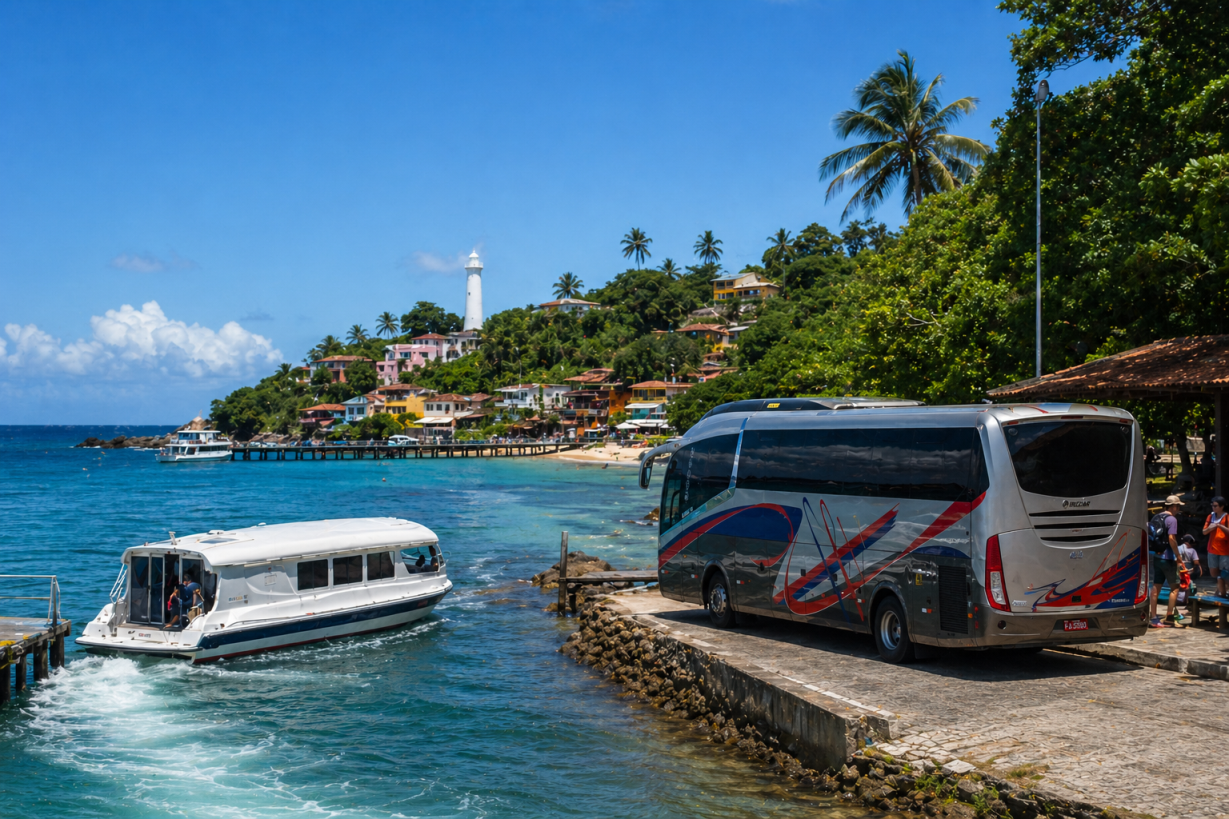
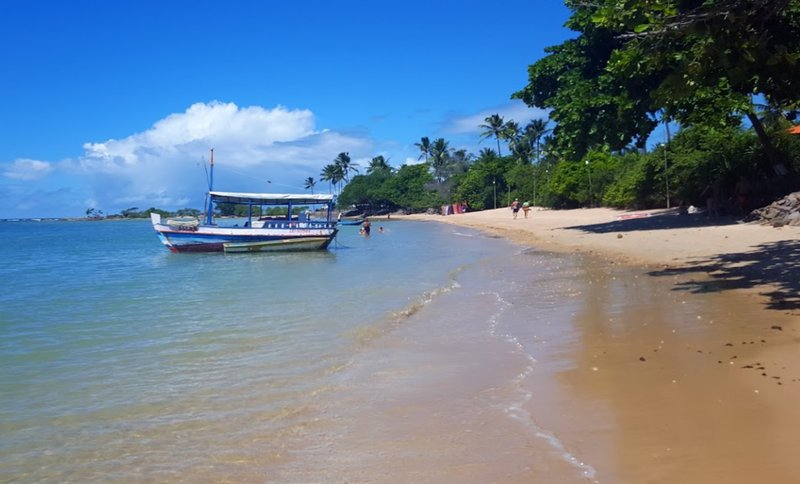
Cross the Baía de Todos os Santos by sea or land, arrive at Tinharé before sundown.
Hand-picked by our editors — only the best 6 transfer options from 18 reviewed.
Verified partners for Transfer Salvador Morro De Sao Paulo tours, free cancellation where available, and instant confirmation on every booking.
5 hr
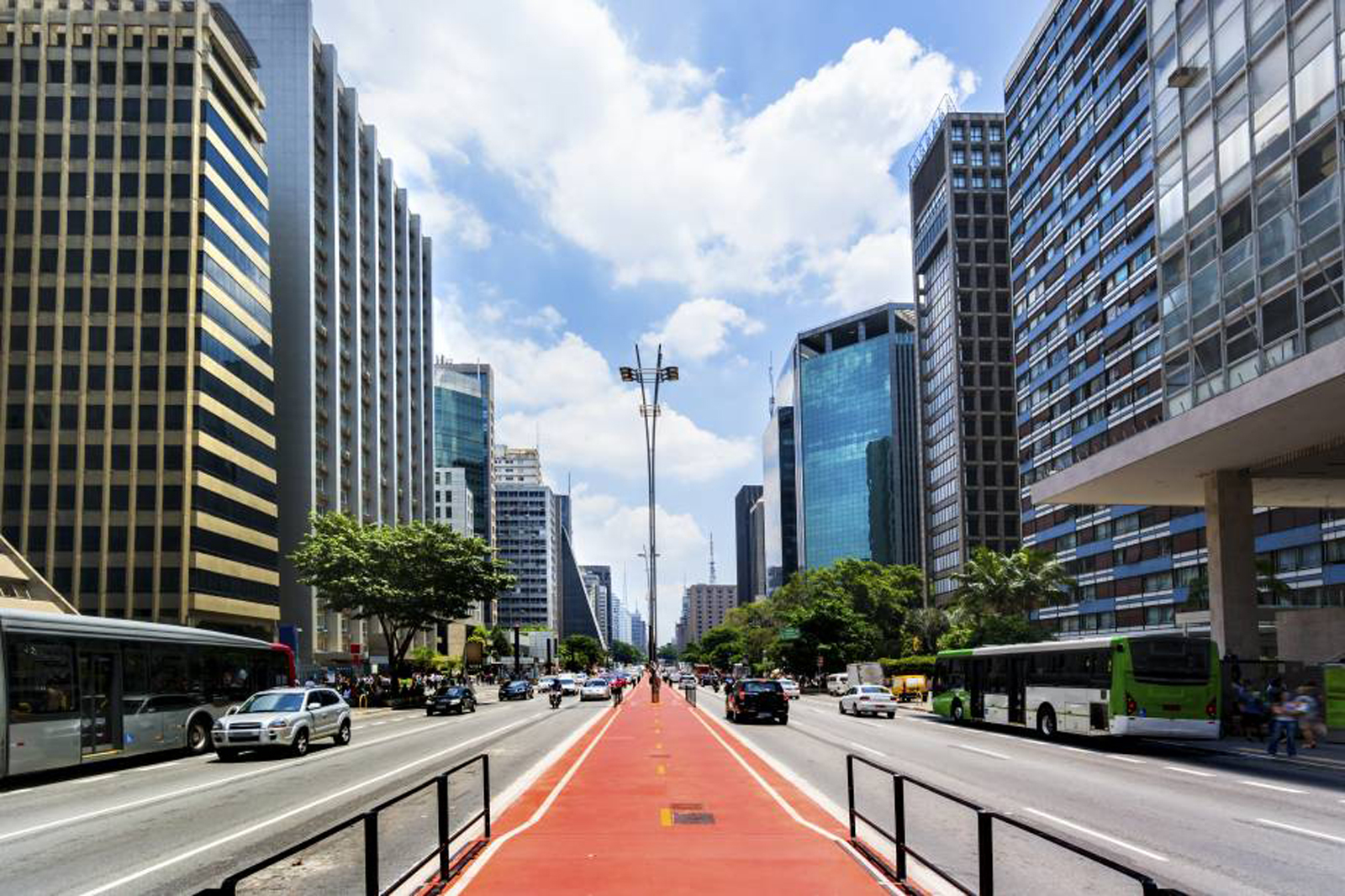
Discover Brazil's largest metropolis through its churches, street art, museums, and historic center
Reserve
2 hr
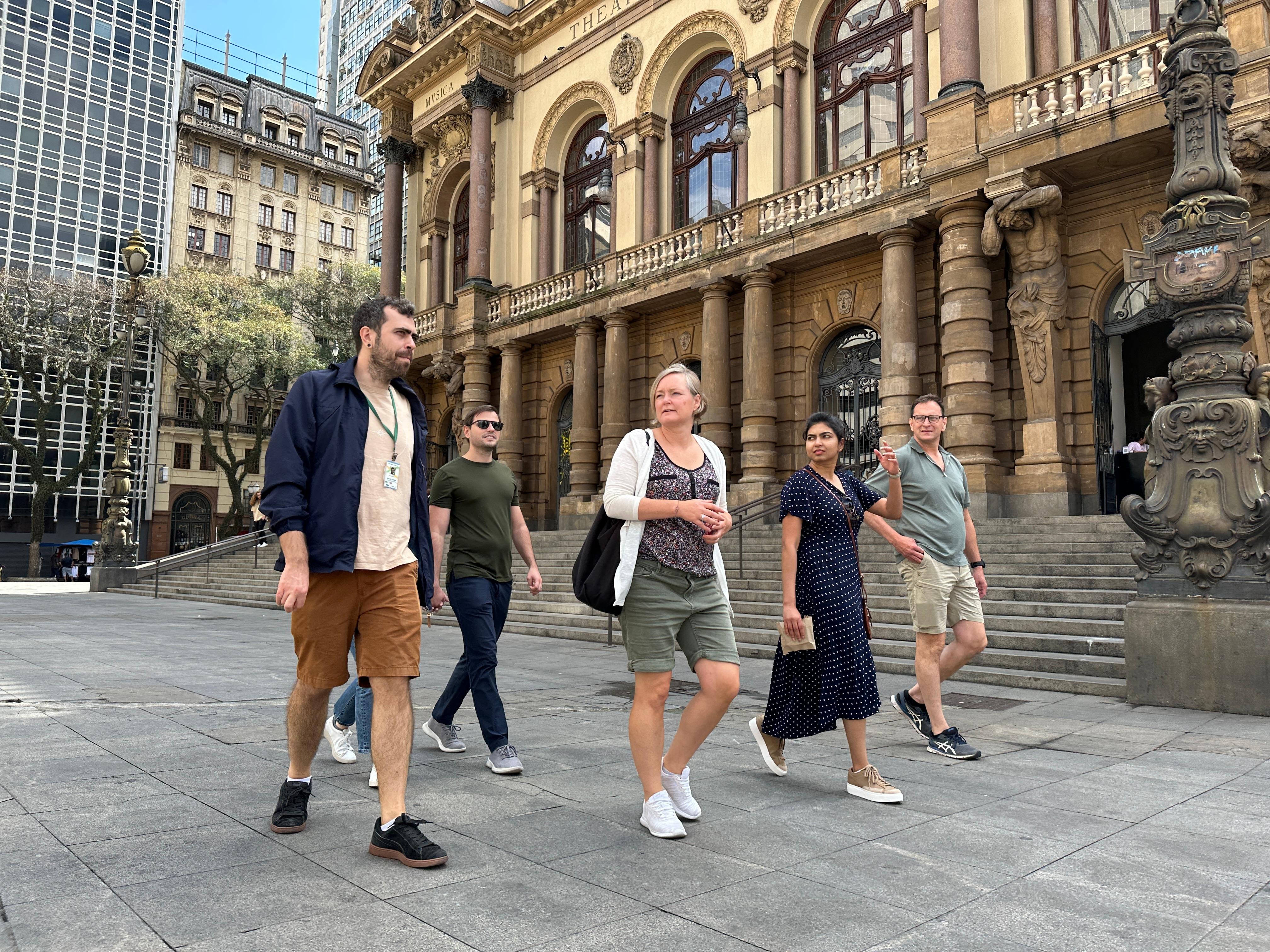
Explore the historic heart of Brazil's largest metropolis with a local expert guide
Reserve
4 hr
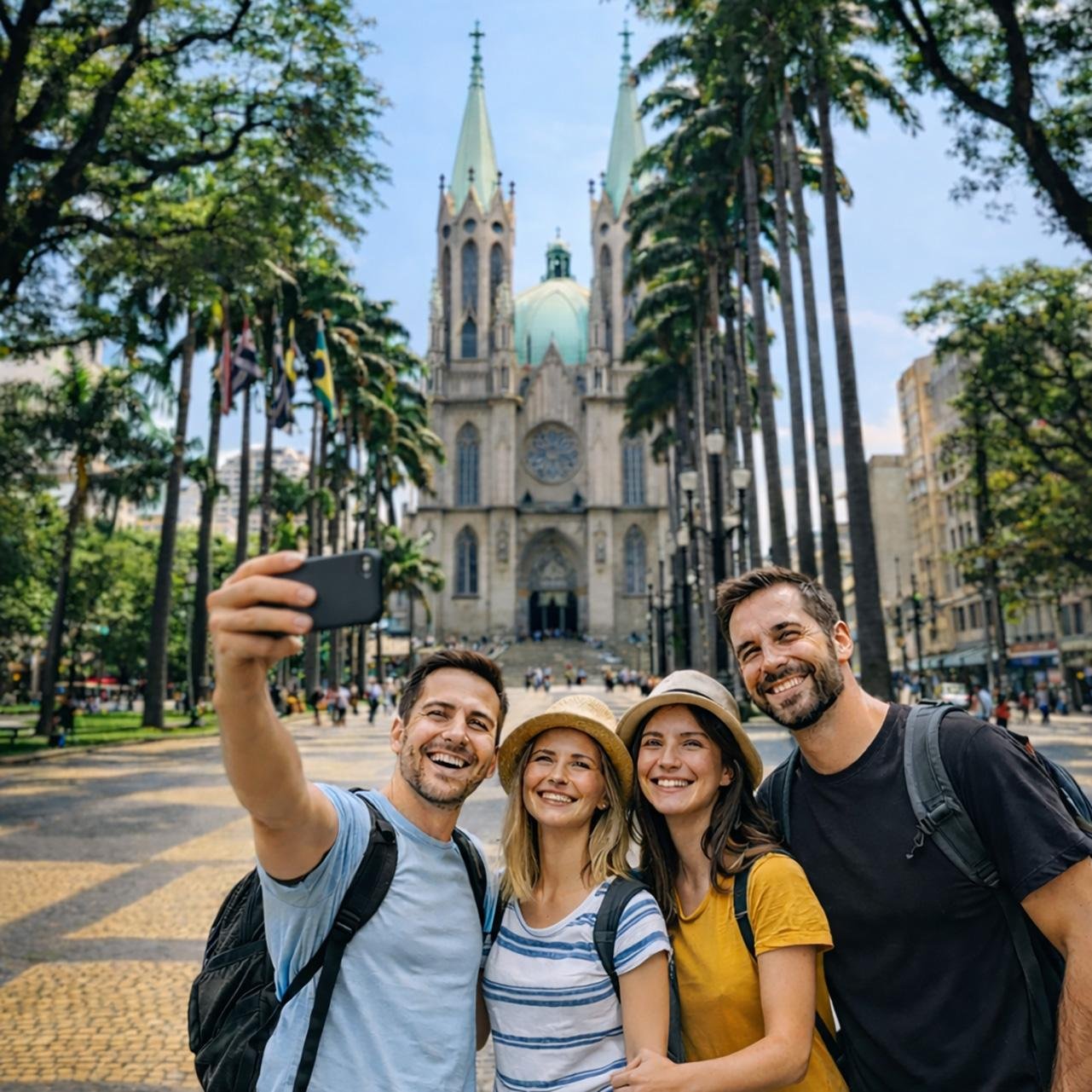
Discover the heart of Brazil's largest metropolis with a certified guide born and raised in the city
ReservePrices from verified partners. Availability updates in real time at checkout. Free cancellation policies apply where shown.
The landmarks, rooms, and views travelers on Transfer Salvador Morro De Sao Paulo tours remember — all visible on a single visit.
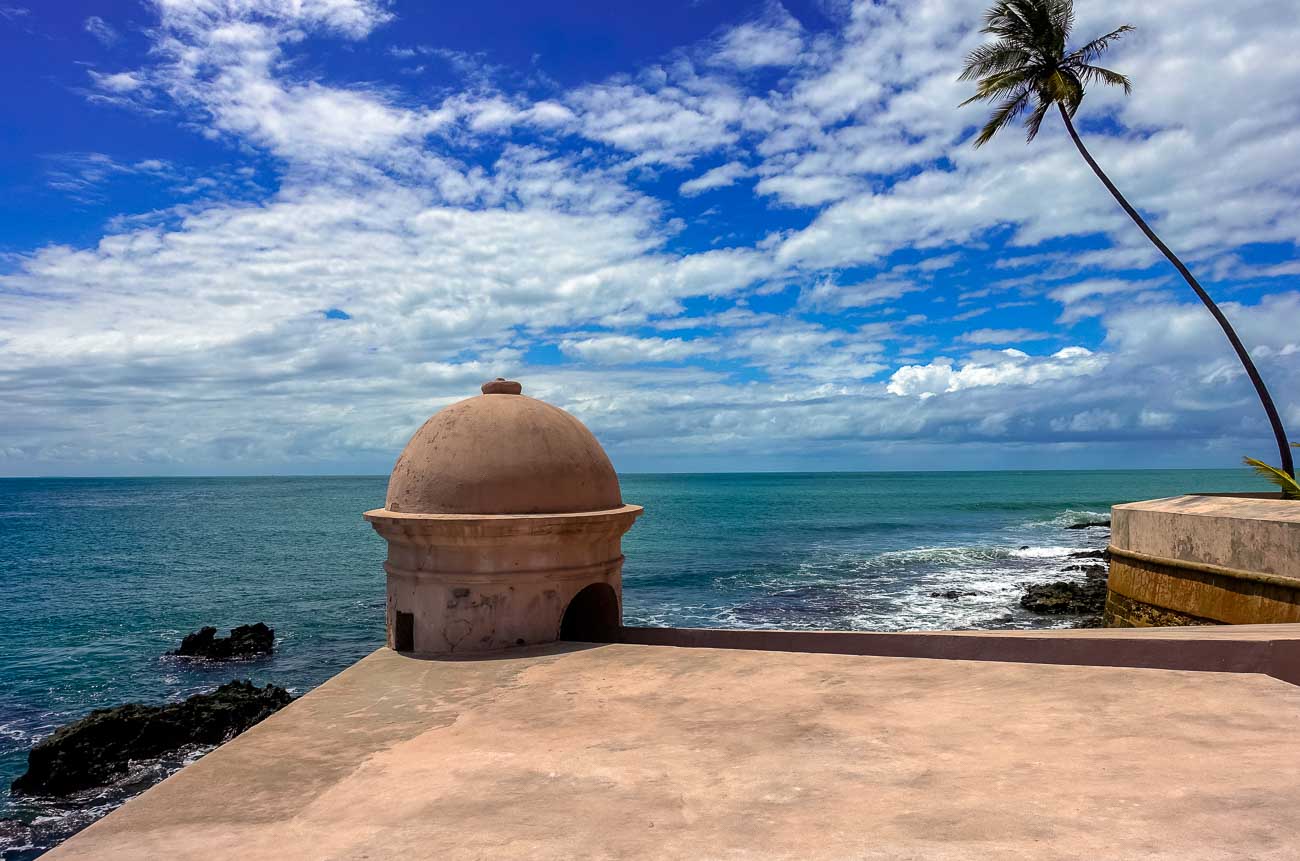
One of the largest defensive structures in Brazil, featuring 678 meters of historical walls.
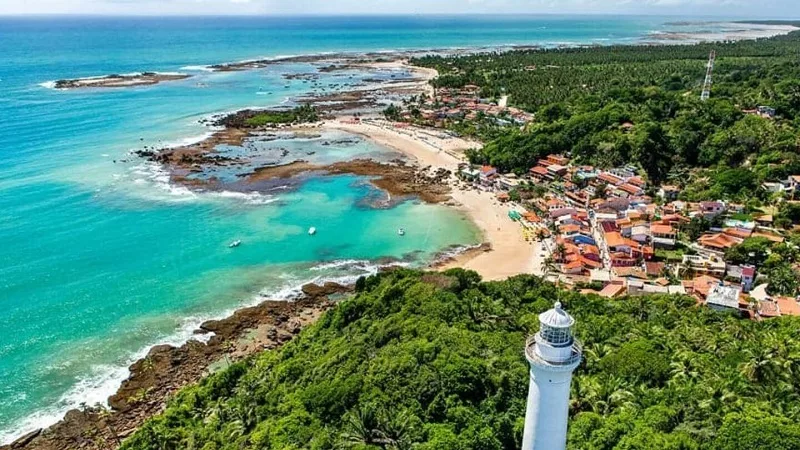
Offers a panoramic view of the island and the Atlantic Ocean, ideal for sunset.
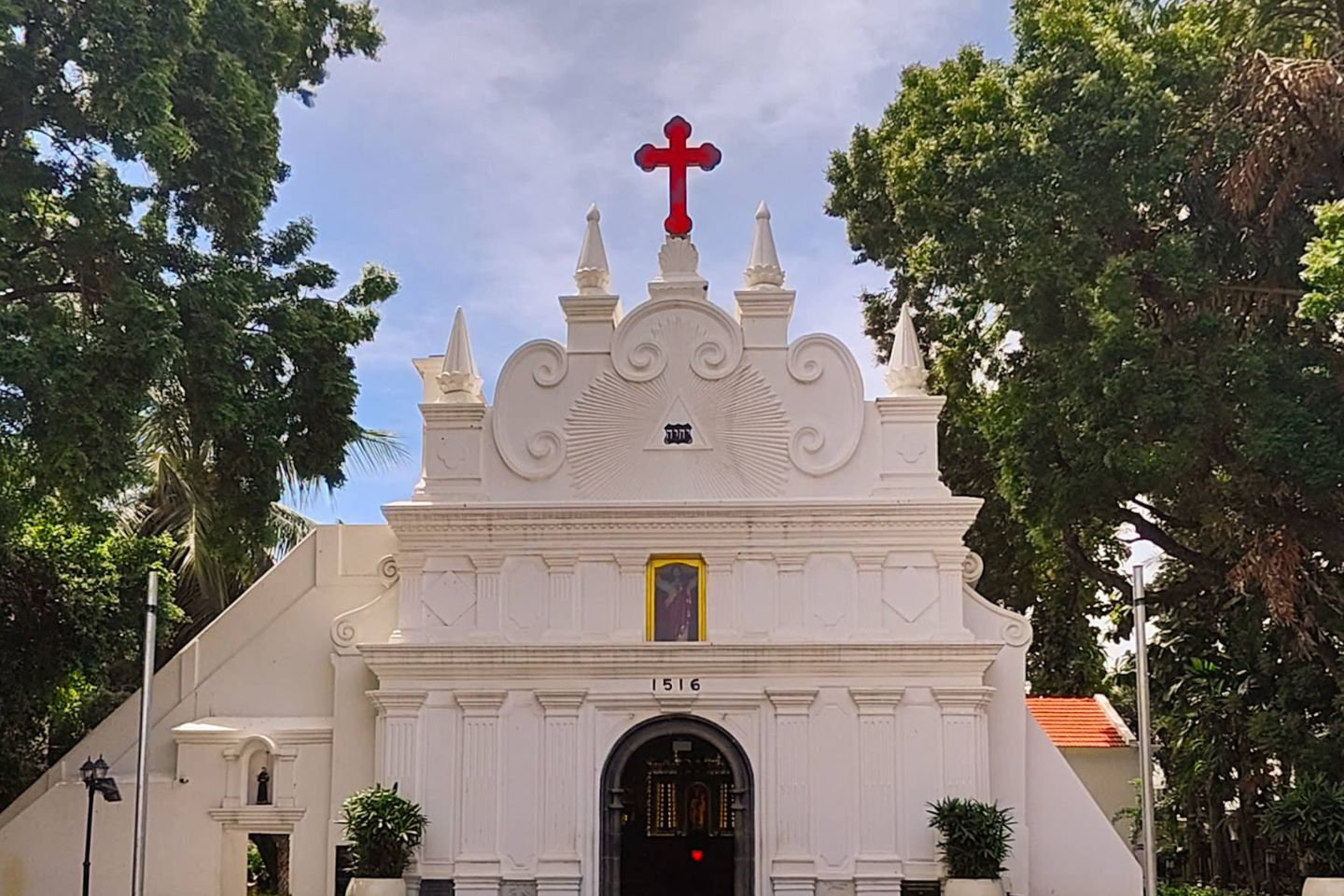
Completed in 1845, this landmark contains sacred relics from the 17th century.
The heart of the island's nightlife with bars and regular beach parties.
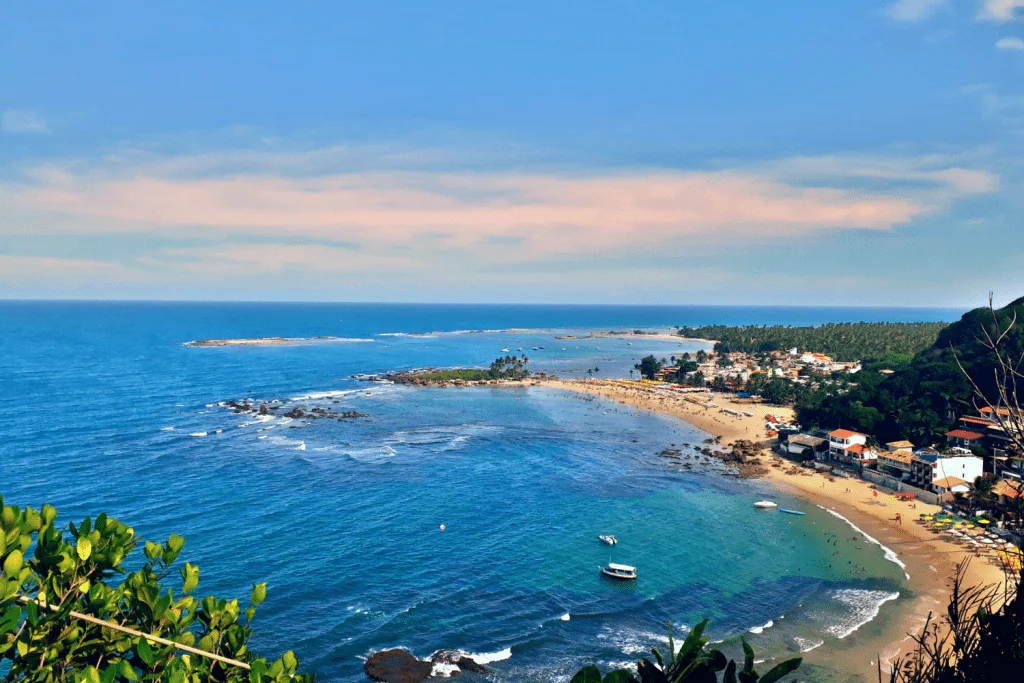
A smaller, bustling beach known for surfing and proximity to the village center.
Every Transfer Salvador Morro De Sao Paulo tour side-by-side — duration, what's included, how you redeem.
| Experience | Duration | Rating | Transfers | Guide | Small group | Free cancel. | Price | |
|---|---|---|---|---|---|---|---|---|
|
Standard Entry Most popular
São Paulo City Highlights with Local Guide
|
5 hr | ★ 4.6 | ✓ | ✓ | ✓ | ✓ | €57 | Book → |
|
Standard Entry
Downtown São Paulo Historical Walking Experience
|
2 hr | ★ 4.9 | ✓ | ✓ | ✓ | ✓ | €22 | Book → |
|
Luxury / Private
Private São Paulo Downtown Walking Experience with Local Guide
|
4 hr | ★ 5.0 | — | ✓ | — | ✓ | €56 | Book → |
All prices from verified partners. Availability and exact terms confirmed at checkout.
The direct catamaran is ideal for travelers prioritizing speed, while the semi-terrestrial route serves those seeking greater stability. Most visitors find the catamaran superior for efficiency, whereas the land-and-sea approach minimizes exposure to open ocean swells.
| Feature | Top pick Direct Catamaran | Semi-Terrestrial Transfer |
|---|---|---|
Speed |
2–2.5 hours | |
Sea Motion Sensitivity |
High | |
Departure Frequency |
Limited daily slots | |
Departure Point |
Salvador Maritime Terminal | |
Transfer Reliability |
Weather dependent | |
Arrival Experience |
Direct to Ilha de Tinharé docks | |
| See tickets → |
Verdict: Choosing the right transfer salvador morro de sao paulo tour depends on your comfort threshold, as booking the direct catamaran tickets offers the fastest journey while the semi-terrestrial alternative provides a more reliable itinerary during rough weather, confirming these transfer salvador morro de sao paulo tours are distinct transport solutions, though many prefer the catamaran for its brevity, and others rely on the semi-terrestrial method for peace of mind when sea conditions are poor for those holding transfer salvador morro de sao paulo tickets.
Choose your ticket, select your date, and reserve in under two minutes. Secure checkout handled by our verified partner.
Instant confirmation by email, with a mobile voucher you can save offline. No printing, no queuing at a collection desk.
Arrive at the entrance, show your voucher on your phone, and walk in. Most tickets include priority or skip-the-line access.
Practical details for Transfer Salvador Morro De Sao Paulo tickets straight from our verified partners — hours, access, rules, and how to get there.
Near Mercado Modelo
Primary departure point for boat transfers
Open in Google MapsDirect catamaran services from Salvador operate regularly.
Ferry to Itaparica, bus to Valença, speedboat to Morro.
Casual beachwear is standard, but modest attire is requested when visiting the historic center or the Church of Our Lady of Light. Comfortable footwear is essential as the village is hilly and unpaved.
Travel light, as you will likely need to transport your luggage on foot or via local tractor-trailers. Security is generally reliable, but keep valuables secure during your transfer salvador morro de sao paulo trip.
The island offers excellent opportunities for landscape photography, especially at the lighthouse. Always ask permission before photographing local residents or private property during your transfer salvador morro de sao paulo tour.
Due to sandy terrain and steep hills, the village presents challenges for those with limited mobility. Many beachfront areas are accessible only by walking or via designated tractor-trailers.
Mobile reception is available throughout the village, though it may be inconsistent on more remote beaches. Most hotels and restaurants provide complimentary Wi-Fi for guests.
The island is very family-friendly, though navigation with strollers is difficult on sand and stone paths. Bringing a baby carrier is highly recommended for families using a transfer salvador morro de sao paulo service.
There is a wide array of dining options ranging from casual beach kiosks to upscale seafood restaurants. Tap water is generally not recommended for drinking; stick to bottled or filtered water.
Pets are generally permitted on the island, but you should verify pet policies with your specific accommodation provider and transfer salvador morro de sao paulo boat operator.
The village is completely car-free, preserving its natural charm and quiet environment. Ensure your transfer salvador morro de sao paulo tickets include the final boat connection to the island pier.
Near Mercado Modelo
Primary departure point for boat transfers
Get directionsBest time to go, insider tips, nearby landmarks, and the cancellation fine print — flip through to skim what matters to you.
How crowds, weather, and events shift across the year.
High season with hot temperatures, lively nightlife, and consistent boat schedules for transfer salvador morro de sao paulo tours.
Mild weather, fewer crowds, and lower prices, though occasional rain may affect boat crossings.
Optimal balance of pleasant weather and reduced tourist density for a transfer salvador morro de sao paulo visit.
Small details that turn a good visit into a great one.
Book your transfer salvador morro de sao paulo tickets in advance to secure preferred departure times.
Carry sufficient cash as some smaller establishments may have limited card processing capabilities.
If prone to motion sickness, opt for the semi-terrestrial route instead of the direct catamaran.
Plan your transfer salvador morro de sao paulo arrival between 08:00 and 16:00 to ensure daylight navigation.
Some walking routes between beaches, such as the path to Gamboa, are only accessible during low tide.
Non-bookable sights within a short walk — free to visit, easy to pair.
Historic defensive fortress with panoramic views.
17th-century church with ornate baroque interiors.
Popular spot for surfing and social activity.
Highest point offering a clear sunset view.
Flexible, no hidden fees.
Most independent transfer salvador morro de sao paulo operators require cancellations at least 24-48 hours in advance for a partial or full refund. The 70 BRL TUPA fee is a government tax and is non-refundable upon arrival.
Hand-picked options within walking distance — pick a district for vibe, or a specific hotel for convenience.
Central village area with most shops and dining.
Vibrant area close to nightlife and beaches.
Quieter, family-oriented beachfront stays.
Morro de São Paulo sits at the northern tip of Ilha de Tinharé, a 42-kilometre finger of Atlantic forest and dune that has never known a paved road.
The island's isolation was engineered by eighteenth-century colonial planners who built the Forte de Morro de São Paulo to guard the mouth of the Rio Una and left no land bridge. That decision shaped the island's modern identity: every arrival is by water or air, and the salvador morro de sao paulo transfer routes—catamaran, speedboat, and semi-terrestrial—have become rituals in themselves, each threading a different geometry across the Baía de Todos os Santos.
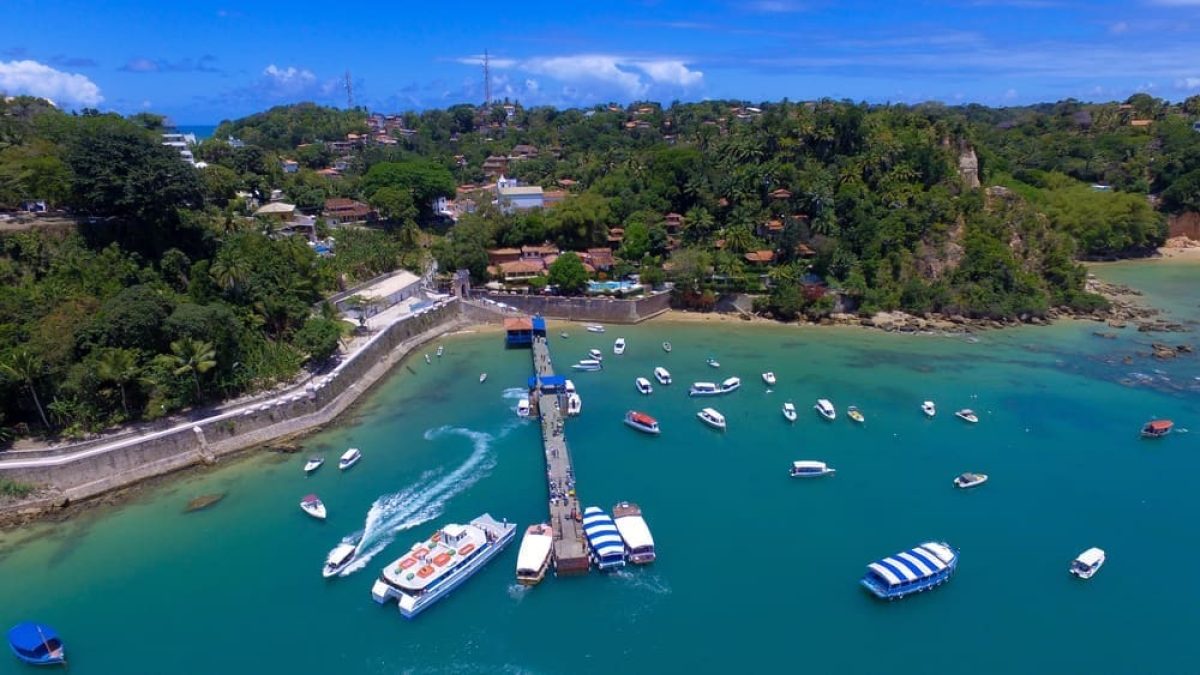
The catamaran route departs from Salvador's Terminal Marítimo and takes two hours, hugging the western shore of Itaparica before swinging east toward Tinharé. Passengers sit above deck as the city's skyline recedes and the bay opens into a succession of mangrove inlets and fishing villages. The semi-terrestrial option cuts the water time by road: a shuttle crosses the mainland to Valença, then a fifteen-minute boat finishes the crossing to the island's pier. Speedboats, launched from private marinas near the Mercado Modelo, compress the journey to under an hour but trade comfort for velocity, skipping across open water at speeds that leave the bay's calmer channels behind. The transfer salvador morro de sao paulo preço varies by season and operator—catamarans hover around 120 BRL round-trip, speedboats near 180 BRL, and the semi-terrestrial route around 90 BRL—but all routes converge at the same weathered dock, where porters wait with wooden carts to haul luggage over sand paths.
The island itself emerged as a backpacker enclave in the 1970s, when a trickle of overland travellers discovered its car-free beaches and built the first pousadas behind the dunes. By the 1990s, Morro de São Paulo had codified its geography into five numbered beaches, each with a distinct sociology: Primeira Praia for families, Segunda for nightlife, Terceira for kitesurfers, Quarta for silence. The Forte de Morro de São Paulo, completed in 1630, still crowns the headland, its cannon embrasures now occupied by tourists watching the sunset rather than Portuguese gunners scanning for Dutch frigates. The transfer salvador morro de sao paulo horários are tightly synchronized with tide and daylight—most departures cluster between 9:00 and 14:30, ensuring arrivals before the equatorial dusk drops at 18:00.
Today the island handles roughly 200,000 visitors annually, a figure constrained less by demand than by bottleneck infrastructure: a single pier, no airport capable of commercial jets, and a 70 BRL environmental preservation fee collected at the dock. The TUPA tax, introduced in 2018, funds waste management and trail maintenance across the Arquipélago de Tinharé, a cluster of islands whose combined population barely exceeds 8,000. The transfer salvador morro de sao paulo catamara remains the most democratic option, mixing Brazilian families, Argentine surfers, and European solo travellers on the same upper deck, all watching the same green coastline scroll past at eight knots.

"Every arrival is by water or air, and the routes have become rituals in themselves."
A step-by-step walkthrough of Transfer Salvador Morro De Sao Paulo tickets — what you'll see, how long each stage takes, and the details that matter.
You board the catamaran at Salvador's Terminal Marítimo, a low concrete pavilion where vendors sell coconut water and fried acarajé from wheeled carts.
The boat's upper deck fills first—passengers claim the starboard rail for unobstructed views of Itaparica Island as the twin engines churn the bay into a widening V of foam. Forty minutes out, the city dissolves into haze, and the water shifts from harbor gray to open green. You pass fishing trawlers anchored in clusters, their nets hung to dry like curtains, and the occasional sailboat tacking toward the mainland.
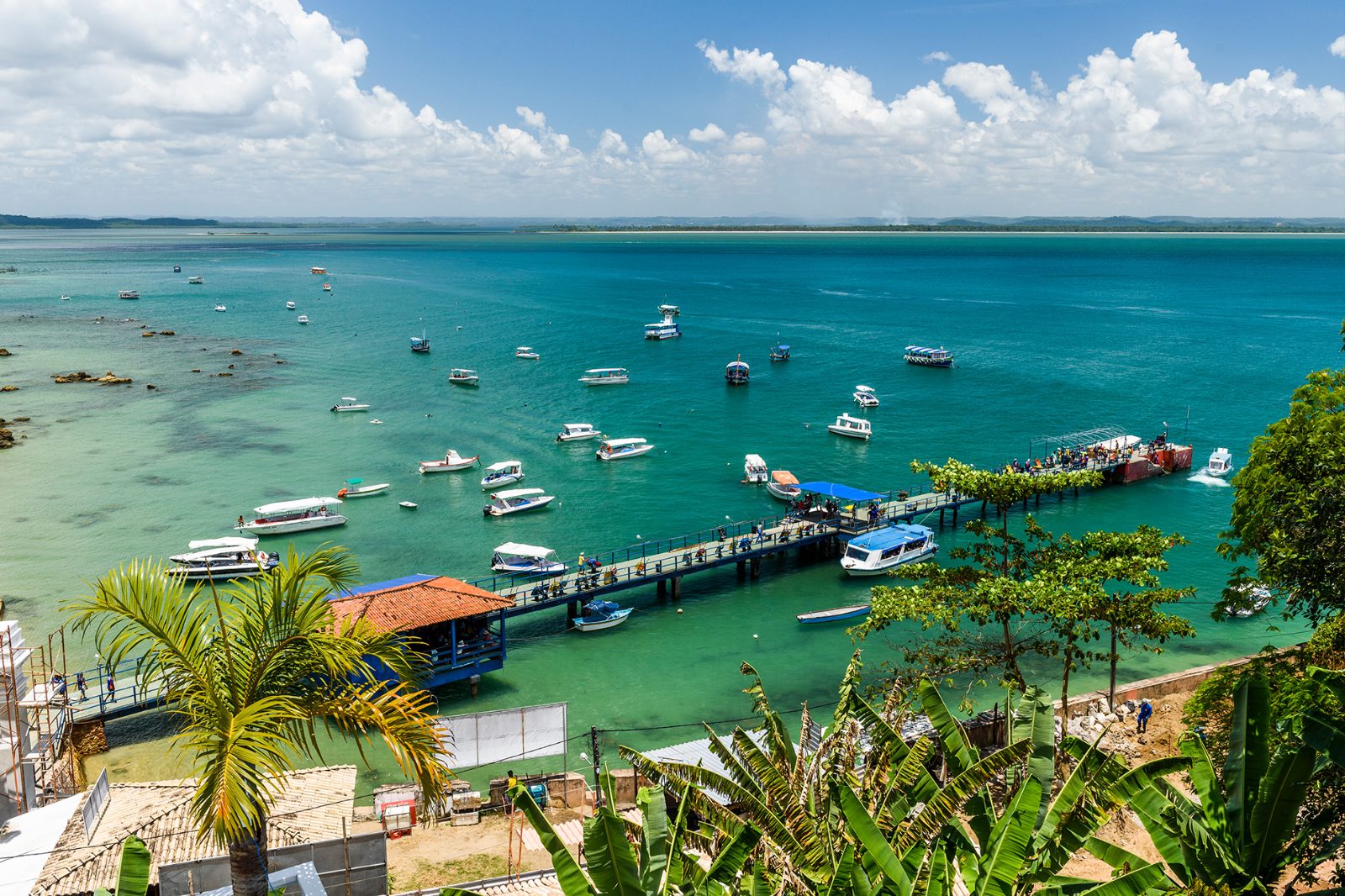
The catamaran slows as it enters the canal separating Tinharé from Boipeba, and the first palms emerge above the mangrove line. A deckhand announces the approach to Morro de São Paulo, and passengers gather their backpacks and duffels. The pier appears—a weathered T of planks crowded with porters in sun-bleached caps, each steering a wooden cart with bicycle wheels. You step onto the dock and pay the 70 BRL TUPA fee at a folding table staffed by two officials with a lockbox and receipt book.
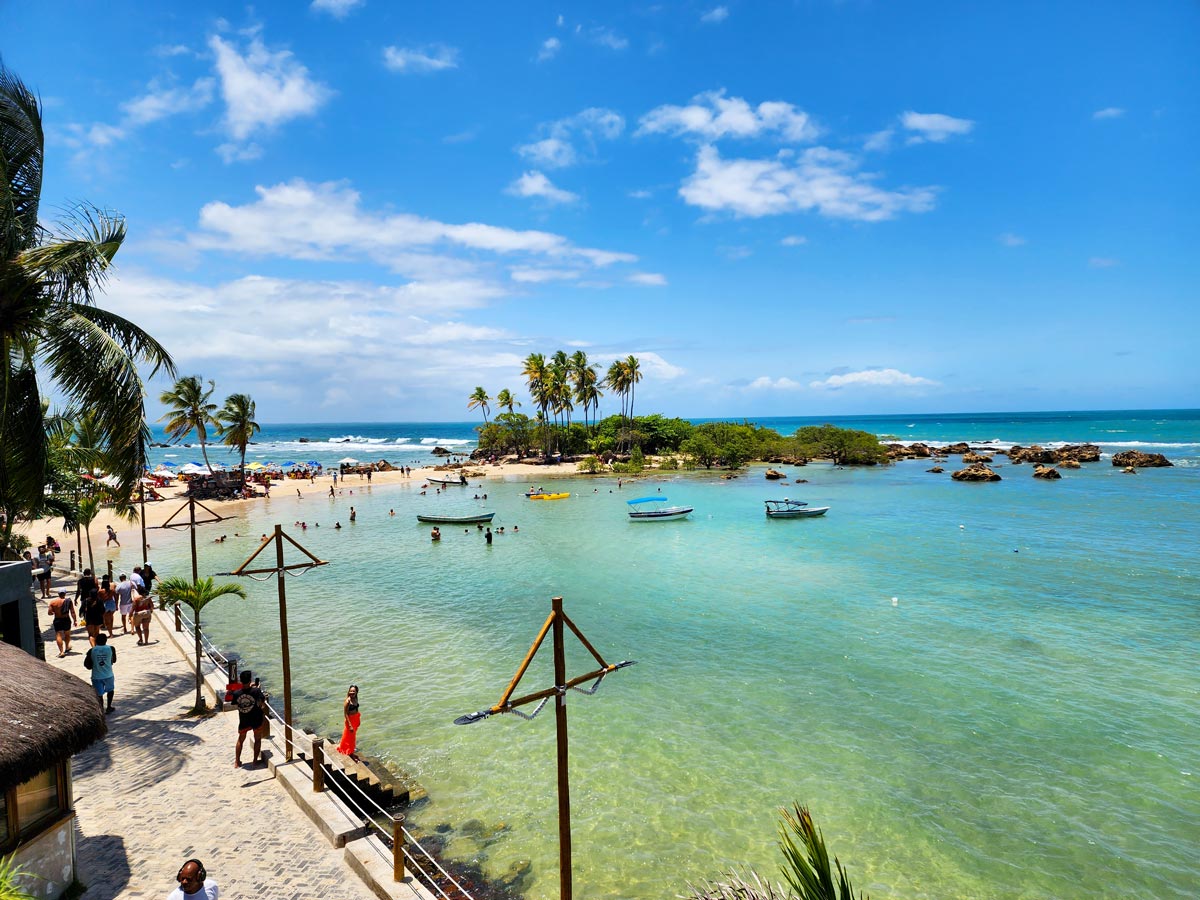
The village begins twenty meters inland: a sandy grid of pousadas, juice bars, and surf shops, all car-free. You follow a flagstone path uphill toward the fort, where the stone walls frame a panorama of the bay you just crossed. Below, Primeira Praia curves into the distance, a kilometer of pale sand ending at a line of fishing boats pulled above the tidemark.
Visitors must pay a 70 BRL TUPA environmental preservation fee upon arrival in the archipelago.
The best arrival window is between 08:00 and 16:00 to ensure smooth daylight navigation.
As the island is car-free, avoid large non-foldable items and prioritize lightweight luggage for your transfer salvador morro de sao paulo journey.
The 70 BRL fee is collected upon arrival at the island's maritime terminal or official access points.
Yes, landmarks like the Fort of Tapirandu are easily accessible once you complete your transfer salvador morro de sao paulo.
The direct catamaran typically takes 2.5 hours, while the semi-terrestrial transfer salvador morro de sao paulo route takes about 4 hours.
Children up to 5 years old and adults over 60 are exempt from the TUPA fee.
Yes, transport services for a transfer salvador morro de sao paulo trip operate every day of the week.
No, the 70 BRL TUPA fee is a separate government charge collected upon your arrival at the island.