
English| EUR
Suggested for you
More currencies
Choose a language
The journey from Salvador to Morro de São Paulo depends on which vessel you board and the sea conditions that day. Most visitors underestimate how weather and tide schedules shape departure times and crossing duration. This guide walks through every variable that affects your transfer time.
Quick answer
The transfer from Salvador to Morro de São Paulo takes between 2 and 3 hours depending on vessel type and sea conditions. Fast catamarans complete the crossing in approximately 2 hours, while slower passenger boats require closer to 2.5 or 3 hours. High winds or rough seas can extend any journey by 20 to 40 minutes, and tide-dependent departures may shift scheduled times by an hour or more during certain months.
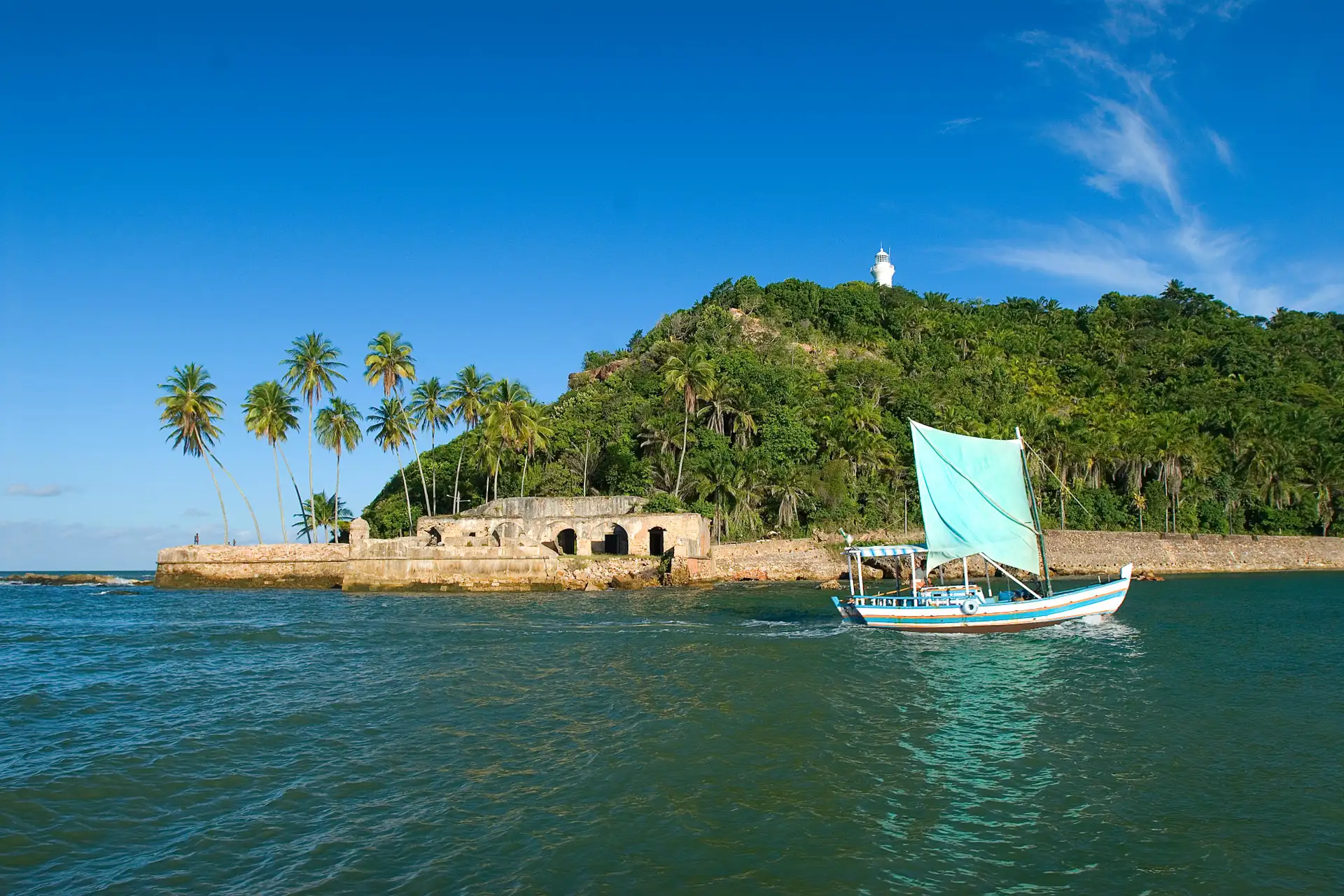
The Baía de Todos os Santos stretches 1,200 square kilometers between Salvador and the Tinharé archipelago, and every crossing to Morro de São Paulo navigates open water exposed to the Atlantic swell. Vessel speed determines the baseline duration, but weather patterns between May and August regularly add time to scheduled crossings when southeasterly winds build afternoon chop. The transfer salvador morro de sao paulo tempo varies by departure point as well. Most services leave from the Terminal Marítimo de São Joaquim or the Terminal Náutico da Bahia in Salvador's lower city, both requiring passengers to arrive 30 minutes before departure for boarding. Catamarans prioritize speed and operate on fixed schedules with limited flexibility, while traditional passenger boats adjust their departure windows around tidal conditions at the Morro de São Paulo pier. A low tide arrival forces boats to anchor offshore and transfer passengers by smaller craft, a process that adds 15 to 25 minutes to the published journey time. Seasonal patterns shape reliability. December through March offers the calmest seas and the most predictable transfer salvador morro de sao paulo tempo, with crossings rarely delayed more than 10 minutes. June and July bring stronger wind and higher waves, and operators occasionally cancel morning departures in favor of afternoon slots when conditions moderate. The village itself has no vehicular access and no airstrip large enough for commercial planes, so the maritime crossing remains the only practical connection for most travelers. Helicopter charters exist but serve a narrow segment willing to pay multiples of the boat fare. Understanding the interplay between vessel type, weather, and tidal schedules prevents the most common miscalculations. A 10:00 catamaran departure places you at the Morro de São Paulo pier by noon under normal conditions, leaving ample daylight to walk to your accommodation. The best arrival window falls between 08:00 and 16:00, a recommendation rooted in avoiding both early morning tide delays and the loss of daylight for navigating the village's sand paths with luggage. The 50 BRL TUPA conservation fee is collected once per visit upon arrival, a detail worth noting when budgeting the overall transfer cost.
“A low tide arrival forces boats to anchor offshore and transfer passengers by smaller craft, a process that adds 15 to 25 minutes to the published journey time.”
Morro de São Paulo is located on Tinharé Island, accessible only by sea or air from Salvador. Travel time varies significantly based on the chosen transit method and prevailing sea conditions.
Catamaran from Terminal Marítimo de Salvador to Morro de São Paulo
Semi-terrestrial transfer from Salvador (bus/ferry/boat) via Valença
Light aircraft from Salvador International Airport to Morro de São Paulo
Planning your arrival between 08:00 and 16:00 is essential to ensure favorable sea conditions and sufficient daylight for walking to your accommodation.
The best arrival window for your transfer to Morro de São Paulo is 08:00–16:00. This schedule avoids potential high tide boat delays and ensures sufficient daylight for navigating the village terrain to your accommodation.
Hot and humid, 25°C–32°C. Frequent sun and occasional short rains.
Warm, 23°C–29°C. Transition period with decreasing rainfall.
Mild, 21°C–26°C. Periodic overcast skies and cooler breezes.
Warm, 22°C–28°C. Generally stable weather with fewer crowds.
Verdict: Aim for an arrival between 08:00–16:00 during the shoulder months of April, May, or October to balance favorable weather with manageable crowd levels.
Confirm these items before departing Salvador to avoid delays or entry complications on arrival.
Everything you need to know about transfer salvador morro de sao paulo tempo
The travel duration depends on the transport method chosen, such as the catamaran or semi-terrestrial route. Please check our dedicated transport section for specific estimates regarding transfer salvador morro de sao paulo tempo.
Yes, sea conditions and tide levels can influence the transfer salvador morro de sao paulo tempo for maritime routes. It is recommended to plan your logistics considering potential variations in boat transit schedules.
Arriving within the optimal daylight window helps ensure a smoother transition to your accommodation, as walking paths can be challenging after dark. This scheduling also helps you avoid potential high tide boat delays that affect the transfer salvador morro de sao paulo tempo.
Visitors are required to pay a 50 BRL TUPA conservation fee per person. This fee is paid once per visit to support local infrastructure and island preservation.
While the island is accessible daily, logistical planning is essential for a seamless arrival. You should coordinate your travel to align with daylight hours and favorable tide conditions.
The best arrival window is 08:00–16:00. This timeframe provides daylight for walking to your accommodations and helps avoid potential high tide boat delays.
Catamarã Boat Transfer
Read more GuideTransfer Schedules & Timetable
Read more GuideTransfer Prices and Costs
Read more Tickets & toursSemi-Terrestre Transfer
Read more GuideHow to get to Morro de São Paulo from Salvador
Read more Tickets & toursAir Taxi Transfer (Voo Flex)
Read more